
By gaining a deeper understanding of organic fertilizer application technology and following AgriLab’s recommendations, the farm has been achieving its target yields in recent years.
LANAGROPROD LLC, located in Chernihiv and Sumy regions, operates approximately 3,000 hectares of farmland. In recent years, the farm has been actively adopting innovative solutions to increase yields and optimize costs. Together with AgriLab, the farm conducted comprehensive soil analyses on the areas where they were most needed, covering approximately 1,500 hectares. This approach has enabled more effective soil resource management and helped the farm make the most of its fields’ potential.
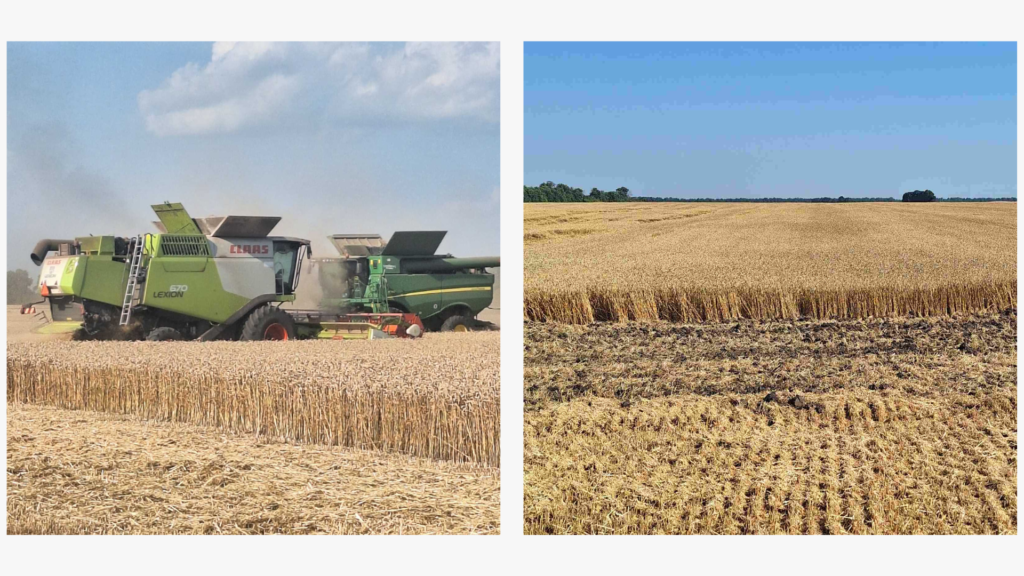
Harvesting at LANAGROPROD LLC
Although most of the farm’s land consists of various types of chernozem, it also includes saline peat and bog soils, as well as saline meadow chernozems. These soil types require a specialized approach and detailed agrochemical analysis. This is essential to unlock the full potential of each plot and ensure effective land resource management.
“Our team of agronomists and engineers has always been highly qualified. We used soil fertility maps and were confident that we were doing everything correctly. However, over time, questions arose: why were some plots failing to deliver the expected yields? What needed to change in our farming practices? That was when we realized we needed help from AgriLab’s specialists,” says Yaroslav Babych, Farm Manager at LANAGROPROD LLC.
Yaroslav Babych, Farm Manager at LANAGROPROD LLC
Cooperation with AgriLab began in 2017, when the farm started actively using liquid organic fertilizers. “We wanted to understand how organic fertilizers affect soil condition, whether this is reflected in agrochemical indicators, and what results we could achieve,” the farm manager adds.
“At first, our cooperation with AgriLab did not deliver the results we had hoped for, but I decided to reassess the situation. Every challenge is an opportunity to learn. So far, we have surveyed up to 1,500 hectares of our farmland. When we incorporate new plots into our operation, questions arise about soil alkalinity, acidity, and other characteristics. That is why we actively investigate these indicators.”
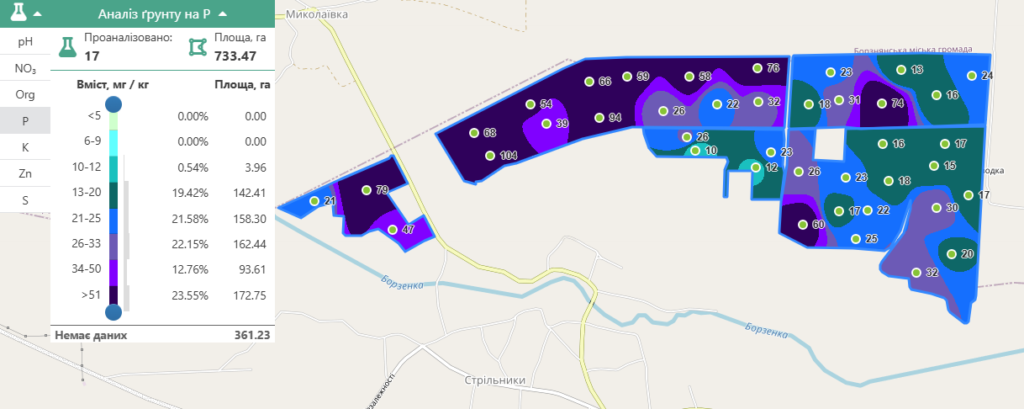
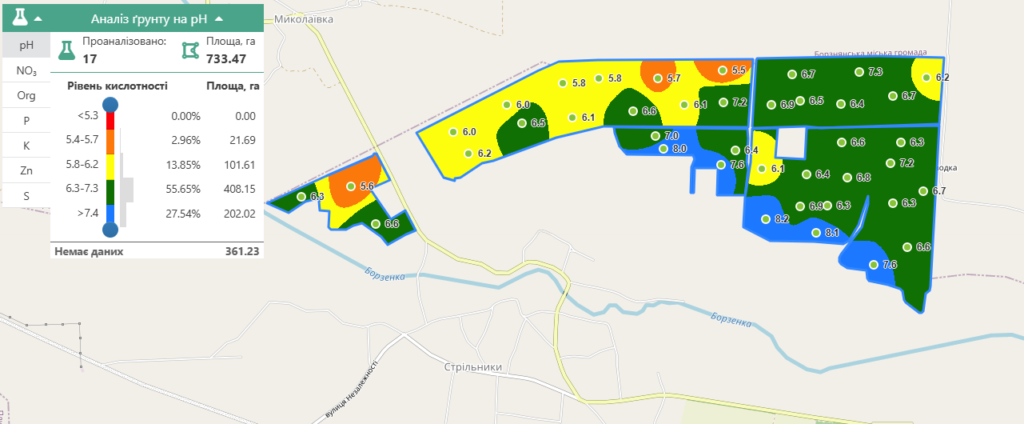
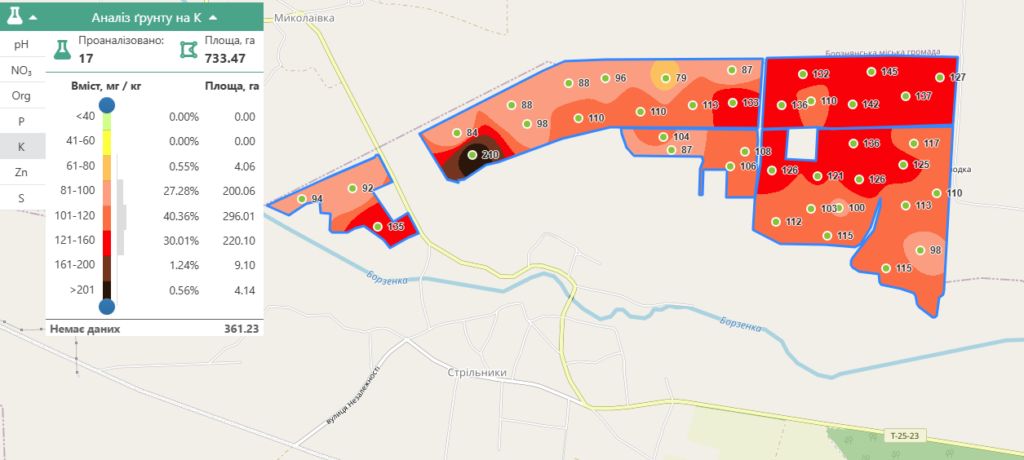
Soil analysis results from one of LANAGROPROD’s fields
LANAGROPROD did not need to make major changes to its machinery, as the farm already had the equipment required for precision farming. However, its farming practices evolved. Previously, nitrogen was applied in separate applications for crop top-dressing. Following AgriLab specialists’ recommendations, the farm now applies it in a single pass on the surveyed areas. Its approach to applying other fertilizers has also changed.
“Previously, when planning to apply 100 kg of potassium to a particular area, we simply spread the fertilizer without analyzing the soil. Now, we open the ‘book,’ study the recommendations, and determine that one plot needs 50 kg of potassium while another requires 150 kg. This helps us improve our results,” says Yaroslav Babych.
This year, the farm is participating in a joint project between AgriLab and the USAID Agriculture Growing Rural Opportunities (AGRO) program. The initiative supports micro, small, and medium-sized agricultural enterprises. Its goal is to improve the efficiency and productivity of grain and oilseed producers by providing agronomic and technological consulting.
“Following the consultations, we decided that starting next spring, we would expand variable-rate mineral fertilizer application and then move toward variable-rate seeding of crops,” the farm manager explains.
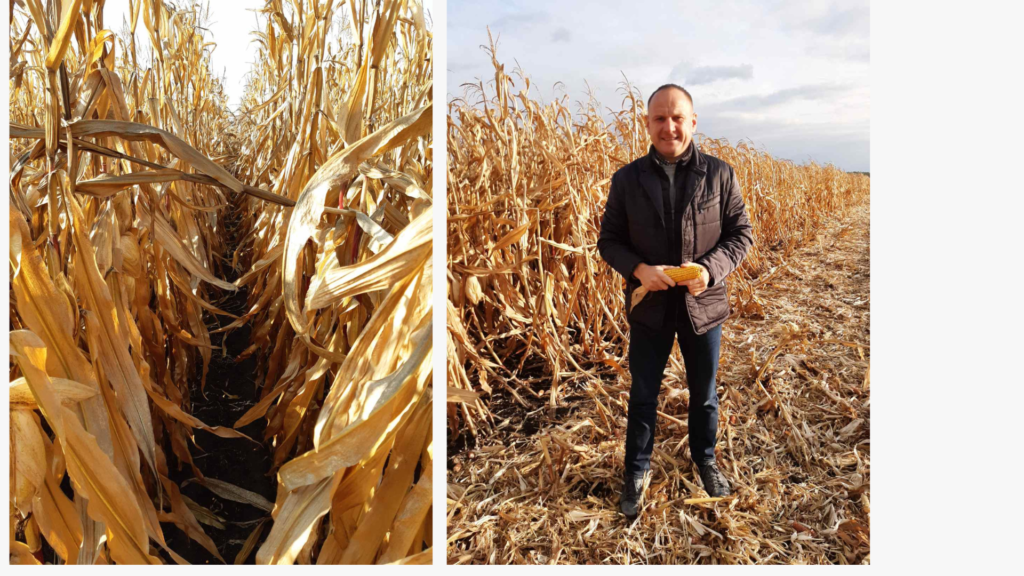
A corn field at LANAGROPROD LLC with a yield of 12 tonnes per hectare
Despite unpredictable weather conditions in recent years, LANAGROPROD has achieved positive yield results.
“I believe several factors have contributed to this, including the efforts of my team and AgriLab specialists. For example, we had never managed to achieve a corn yield of 12 tonnes per hectare on a dry matter basis. We usually harvested 9–10 tonnes, but never 12. I had also never achieved a malting barley yield of 8 tonnes per hectare before, but this year we reached exactly that result. Sometimes I found it hard to believe when people reported yields like these, but this year our farm really achieved them. As for rainfall, our conditions were much the same as everyone else’s,” says Yaroslav Babych.

