
Pavlo Marushchak is the head of Ustyanske Family Farm, located in central Ukraine, in Vinnytsia Region. A true farmer with deep roots, he grew up on the land his father once cultivated. Today, Pavlo manages a farm with a land bank of 590 hectares. His philosophy is simple: “This is where I belong. This is my land. There is no other path.” Despite all the challenges brought by the war, Pavlo remains committed to his people, machinery, and the fields that help feed the country.
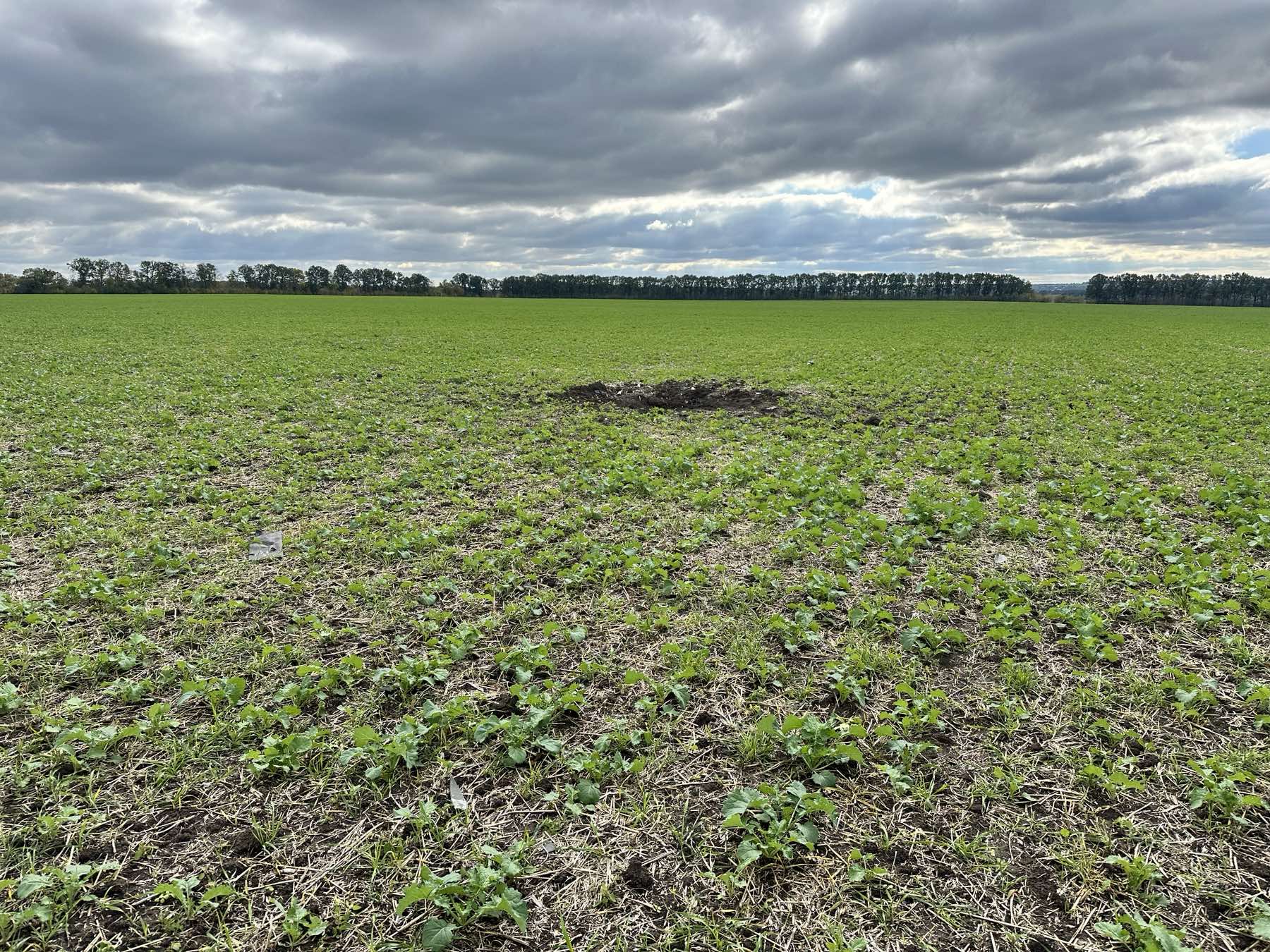
On February 24, 2022, everything changed. The farm found itself operating under conditions of uncertainty: roads were blocked, fuel was unavailable, fertilizer supplies were at risk, harvested crops were stranded in storage, employees began to be mobilized, and farm facilities faced the risk of being hit. But the greatest challenge was the threat to the future: how do you plan your work when any day could be your last? There were even cases when combat drones were found in Pavlo’s fields. During harvest, every trip into the field became a risk to workers’ lives. As a result, farmers had to think not only as agronomists but also as crisis managers. One such crisis-management decision was to maintain operational efficiency through soil analysis and more detailed planning of field operations.
A Step Toward Efficiency
The farm grows major grain and industrial crops: winter wheat, rapeseed, and grain corn. Soil diagnostics were conducted specifically for these crops.
“We had been thinking about conducting soil analysis on the farm, but, you know, there was always something else to deal with, and we never had the funds. When the opportunity arose to participate in the USAID AGRO Program, we realized that the time had come. And we were right. Under the project, we had to cover 46% of the cost of the soil analysis, while the rest was covered by the program,” says Pavlo.
Together with colleagues who also wanted to participate in the program, he turned to AgriLab specialists to conduct comprehensive field agro-diagnostics. The analyses were performed by Ward Laboratories, a leading U.S. laboratory with an international reputation in agricultural chemistry. Thanks to this data, Pavlo gained a clear understanding of his fields’ needs for the first time: which nutrients were required, on which areas, and in what quantities. This knowledge made it possible to adjust procurement, optimize costs, and reduce risks.
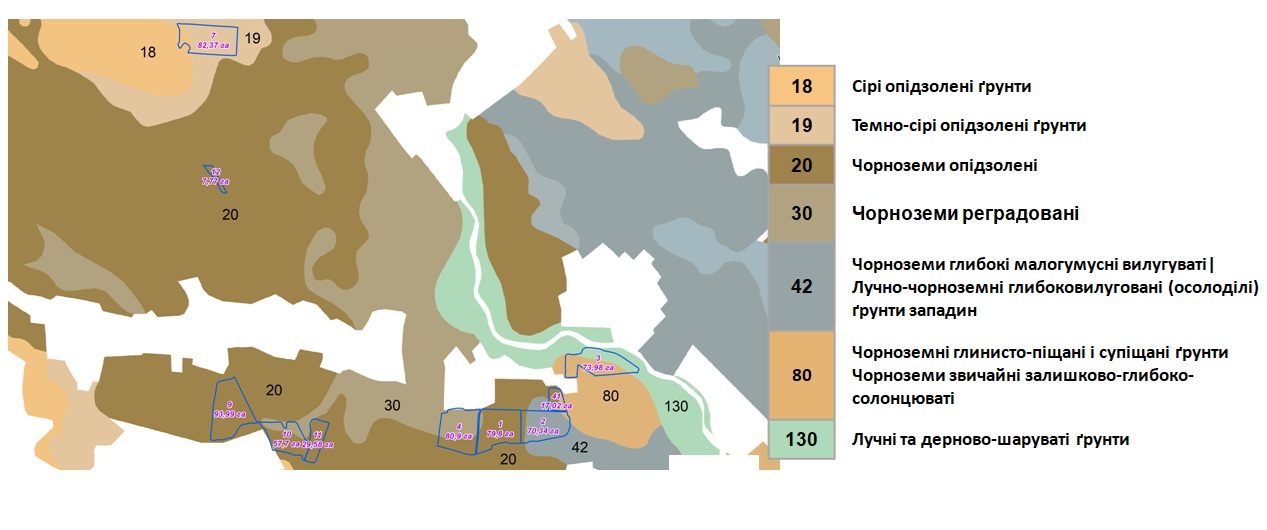
Soil Conditions on the Farm
The soil conditions across Ustyanske LLC proved to be highly variable. Significant differences were identified between fields, both in terms of soil types and natural fertility levels. This diversity requires an individual approach to each part of a field and well-grounded agronomic decisions.
Agro-Diagnostics Recommendations
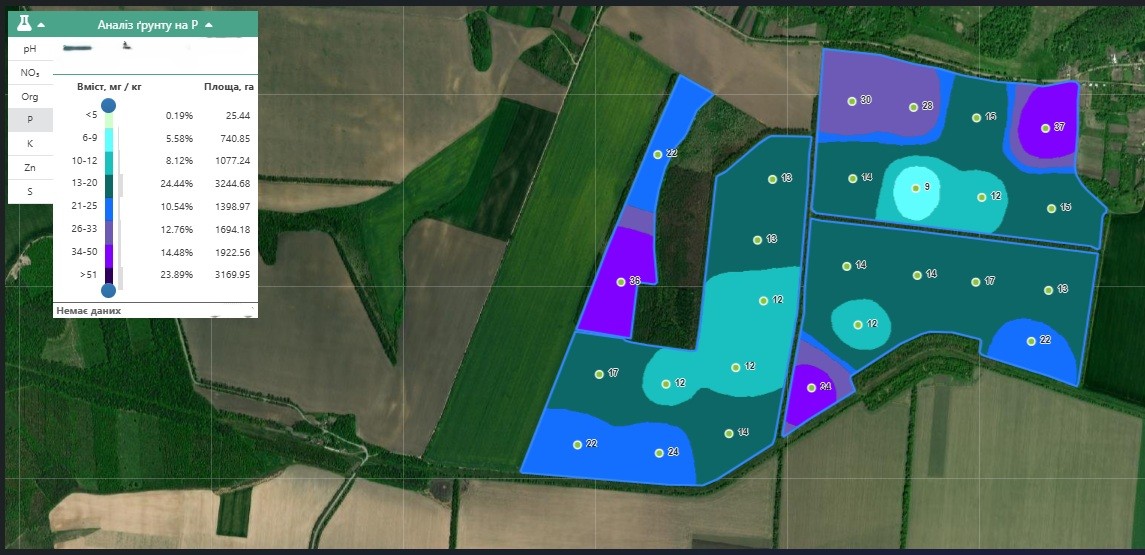
The analysis of plant-available phosphorus showed significant differences between areas within the fields.
For example:
- Phosphorus requirement for grain corn — 15–54 kg/ha of active ingredient
- For winter wheat — 15–64 kg/ha
- For winter rapeseed — 15–65 kg/ha
Based on these results, the use of variable-rate fertilizer application was recommended, along with clear recommendations on fertilizer rates and composition for each crop and field.
Overall, the recommendations included:
- Apply localized pH correction in specific areas;
- Given the characteristics of the farm’s fields, implement variable-rate fertilizer application for phosphorus, potassium, sulfur, and zinc according to planned and economically efficient yield targets, both between fields and within individual fields;
- In low-productivity zones, use lower seeding rates to reduce costs and optimize the area available to plants for accessing nutrients and moisture.
Results
The project became a key milestone in the farm’s long-term transformation. For the first time, the farm introduced 3–5-year agronomic planning, along with variable-rate fertilizer application and data-driven procurement decisions rather than relying on intuition. Despite all the challenges, Pavlo not only kept his team together but also helped others: from the first weeks of the war, the farm transported hundreds of tonnes of grain to mills in blockaded Kyiv, supported the local community, and continues to invest in the future.
“We have no right to wait,” says Pavlo. “If not us, then who? We grew up here. And we want our children to be able to grow, work, and build their future here too.”
The farmer has a clear plan for the coming seasons: to improve crop nutrition practices, including the introduction of variable-rate fertilizer application, and adopt new digital solutions to help manage the farm’s resources. In the long term, the goal is to scale these technologies, optimize costs, and increase the profitability of every hectare. Pavlo will calculate the actual savings over the course of the season, but he has already gained valuable information about the health of his fields. He also found like-minded people through the project who share the same values and are equally committed to development. He is confident that agriculture has a future — and he intends to continue working in it.
His story is about more than agricultural business. It is about responsibility. About resilience. About how American support through programs such as USAID can become a real tool for change. Not in theory — but on a specific field, in a specific village, with a specific farmer.
This material was prepared as part of a project implemented by AgriLab with the support of the USAID Agriculture and Rural Development Program — AGRO. We thank the American people for their support.

