
On October 10, a demonstration site for Agrilab’s “Profitable Field” project was established at Poltava-Sad in Poltava Region. A comprehensive field trial was set up on a 20-hectare experimental plot to study grain corn production under different tillage technologies, nutrient management systems, and field management approaches.
The main objective of the demonstration site was to demonstrate how different tillage technologies — ploughing, deep loosening/chiseling, disking, and strip-till — affect corn yields, the efficiency of moisture accumulation and retention, and the economic performance of each technology under the specific conditions of the region.
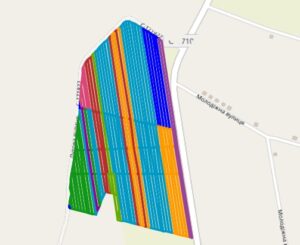
Map of experimental plots
Particular attention was paid to crop nutrition. The trial evaluates the efficiency of fertilization systems using solid granular fertilizers (ICL, Agromix) and liquid starter and nitrogen fertilizers (UAPG, UTK Khimalliance, Elicit Plant, Imisk Ukraine, Hekagro) under different tillage systems.
Comparative data and research results are available on the “Profitable Field” portal.
This field was subjected to additional tillage operations for the first time, including ploughing, disking, and deep loosening (chiseling), using the farm’s existing machinery. Previously, the field had been managed exclusively with strip-till or direct seeding. Strip-tillage in spring was carried out using a BEDNAR STRIP-MASTER EN6000 combined with a FERTI-CART FC3500, with granular fertilizer applied simultaneously. The seedbed strips were prepared immediately before planting using a Pluribus unit, with liquid starter and nitrogen fertilizers applied at the same time. The preceding crop was brown mustard. The grain corn seeding rate was 60,000 seeds/ha, with LG 31305 used as the standard hybrid. The field was not irrigated.
We want to discuss how the corn season is coming to an end directly from the soil pit, allowing us to assess as objectively as possible which tillage option performed best. Let’s look at each one individually.
Ploughing
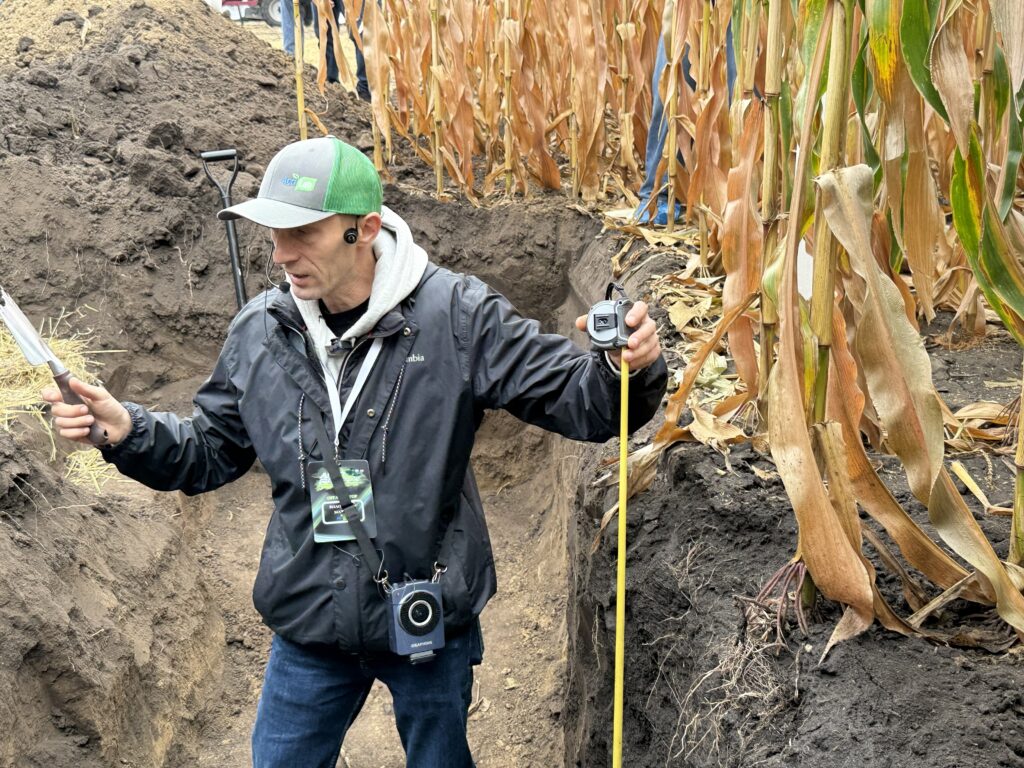
“The first thing I want to draw attention to is the depth of the humus-rich horizon. Here, we have 80 centimetres that need to be used to their full potential to achieve high yields. For this, it is important that the root system can penetrate the entire soil profile,” emphasized Volodymyr Makhota, an agronomy specialist.
A slight compaction layer was detected at a depth of 30–35 cm. Most of the roots were concentrated in the 5–30 cm layer, corresponding to the depth of ploughing, but some corn roots reached 100 cm. When the soil pit was excavated, we expected to find the root system only within the ploughed layer. However, since this was the first year of ploughing on the field, the roots had penetrated deeper. This can be attributed to the high quality of the crop nutrition system, which was based on detailed soil analysis.
Disking
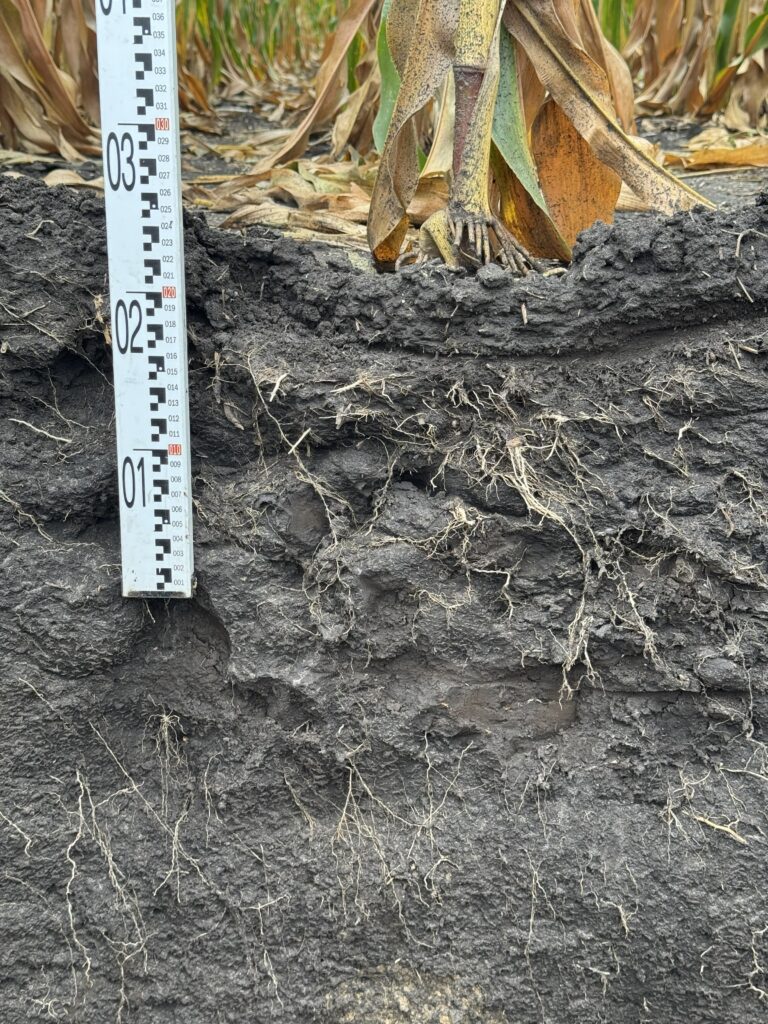
Examining the soil pit under this technology makes it possible to assess the suitability of disking for this soil. Tillage was performed to a depth of 18–20 cm using heavy disc harrows. It was found that even when heavy discs were used, a compaction layer formed at a depth of 20–25 cm during the first year. Most of the roots were concentrated above the compacted layer, at a depth of 5–20 cm, although some roots penetrated as deep as 70 cm.
Based on these observations, the expected yield under this technology is likely to be significantly lower than with the other tillage systems. After just one year of disking, the soil showed compaction that made it impossible to dig deeper with a spade. The compaction was not continuous, but occurred in distinct layers.
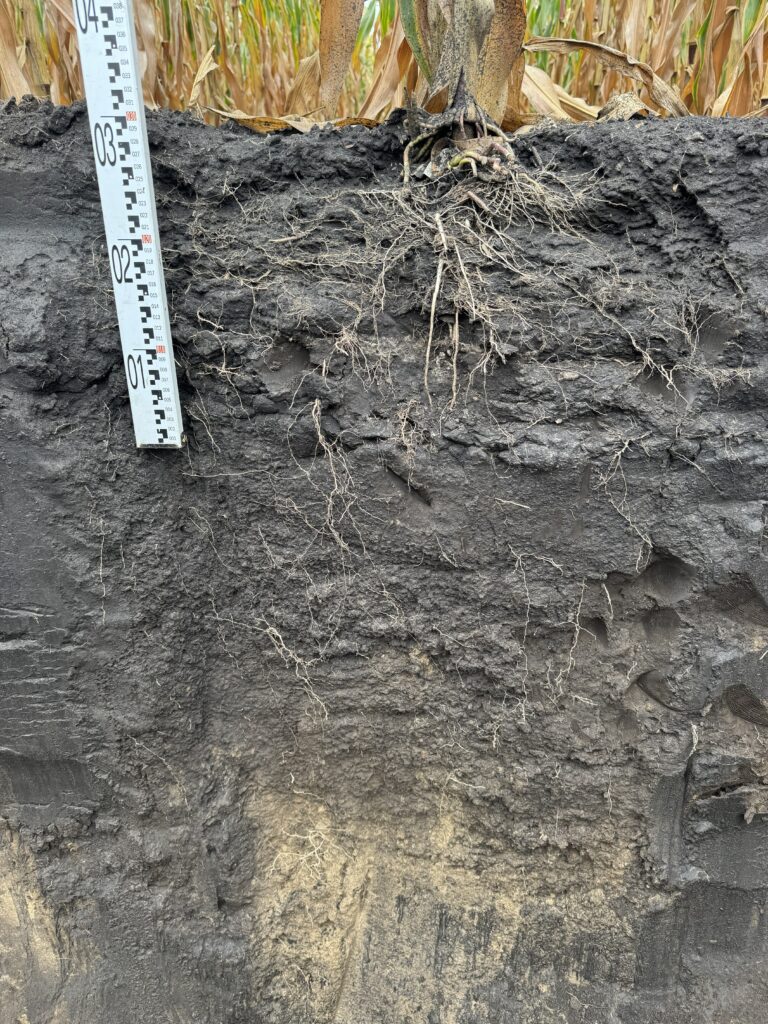
Preliminary conclusion: the use of a heavy disc harrow on this soil creates less favourable conditions for winter moisture accumulation and root system development, which consequently reduces the yield potential compared with the other tillage options on the demonstration site.
Chiseling
As with ploughing and disking, two moisture-closing operations and pre-sowing cultivation with a BEDNAR SWIFTER SE 12000 compactor were carried out under this tillage system, with loosening to a depth of approximately 35–40 cm. No compaction was detected at the depth of tillage. The deepest corn roots reached 105–110 cm, with a significant proportion of the main roots growing downward — something that was not observed under ploughing. This characteristic is typical of such technologies and can only be clearly seen in a soil profile.
The soil remained dry throughout the season, and there were almost no roots within 5 cm of the surface. Normally, when sufficient moisture is available, the root system develops closer to the surface. The vast majority of the roots were located at depths of up to 40–45 cm. The demonstration plot had 90 mm of available soil moisture reserves, and the purpose of the study was to determine which tillage system could make the most effective use of winter moisture. The results showed that chiseling performed this task quite effectively.
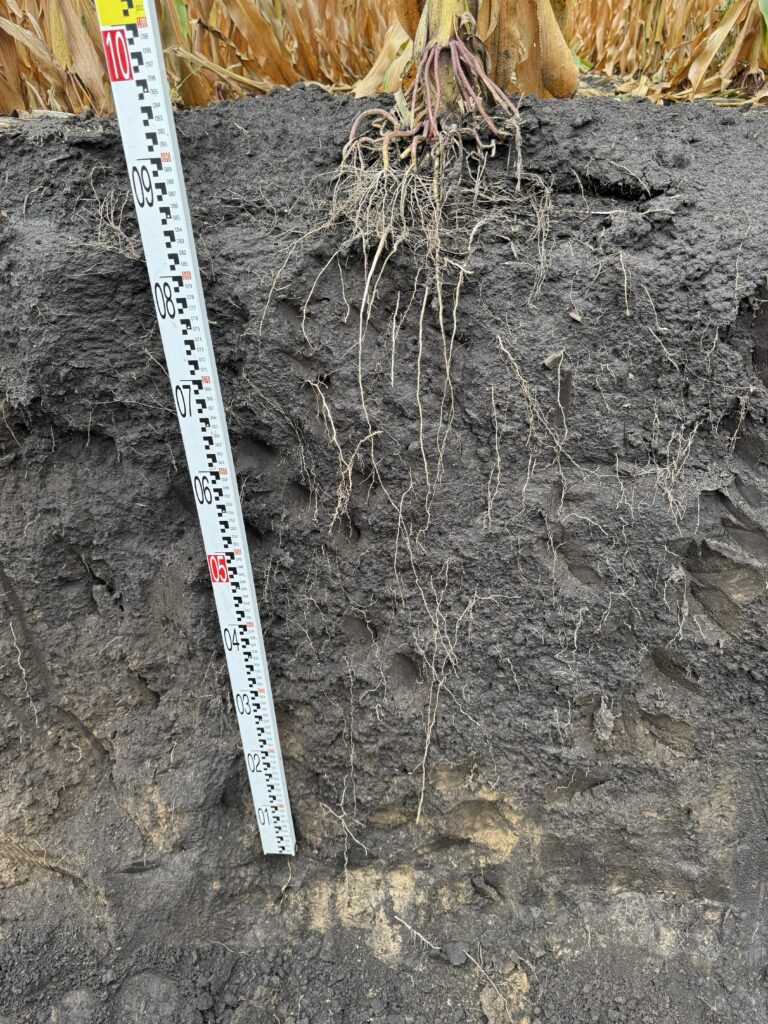
“When I walked across this field while the corn was still mostly green, I paid attention to how the different tillage technologies were performing. During the milk stage, I noticed an interesting fact in the ploughed area — there was sufficient moisture accumulated. In the disked areas, the field looked level, but because of a slight slope, a significant amount of moisture was lost through horizontal runoff during heavy rains,” noted Volodymyr Makhota.
Strip-till
A BEDNAR STRIP-MASTER EN6000 + FERTI-CART FC3500 was used here to prepare the strips. The task of the BEDNAR STRIP-MASTER EN 6000 strip-tillage cultivator, combined with the COMBO SYSTEM hopper, was to create an ideal seedbed for corn under strip-till technology. The unit operated with a 70 cm row spacing and a tillage depth of 25 cm, while simultaneously applying fertilizer directly into the tilled soil profile.
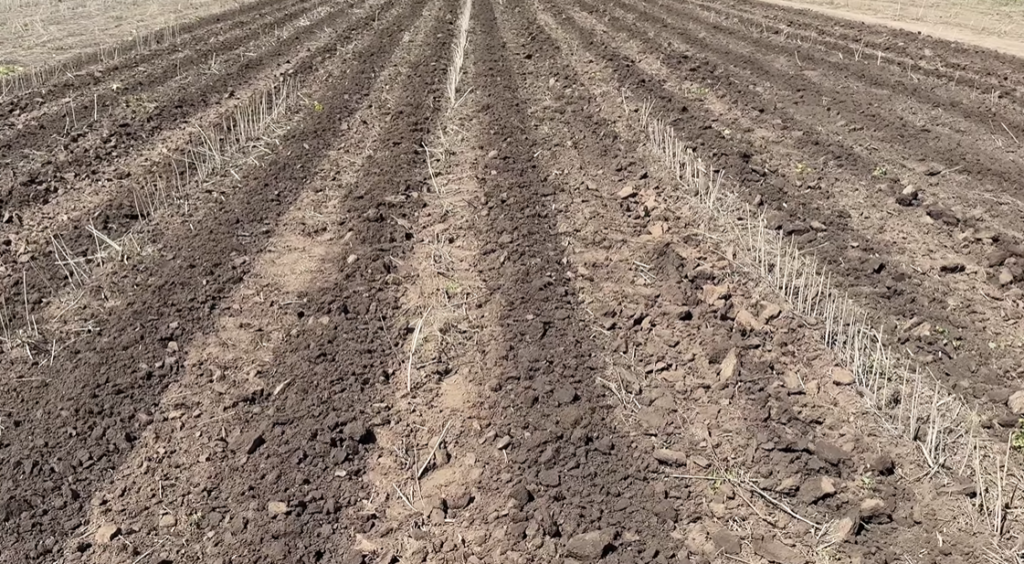
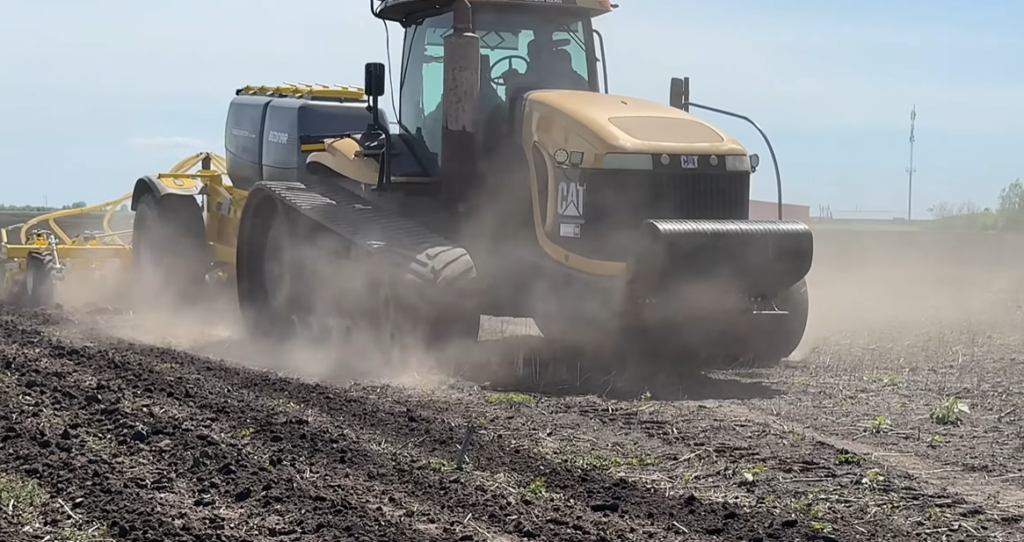
This operation combines soil loosening, seedbed strip formation, and localized nutrient application in a single pass, which is particularly important for moisture conservation and uniform crop establishment under unstable climatic conditions.
The BEDNAR STRIP-MASTER cultivator was specifically designed for precise strip-tillage and high-accuracy operation even under minimal moisture conditions. The STRIP-MASTER can operate at row spacings of 80 cm, 75 cm, 70 cm, 50 cm, and 45 cm, at depths of up to 35 cm. The unit features a universal, heavy-duty frame that allows the required spacing to be set for preparing strips for a specific crop. The STRIP-MASTER EN working section is mounted on a parallelogram, providing excellent terrain following and maintaining the set tillage depth. The section consists of a cutting coulter, row deflectors, a shank with a chisel point, two row-forming discs, and a heavy roller. Each working component can be easily adapted to specific farming conditions and the agronomist’s requirements.
“For regions with unstable climatic conditions, such as Poltava Region, an effective solution is to combine Strip-Till with deep loosening using BEDNAR TERRASTRIP strip-tillage deep loosening equipment, which can operate at depths of up to 55 cm when necessary. This combination makes it possible to break up compaction in deeper soil layers, achieve excellent moisture accumulation in the upper horizon during autumn and winter, and simultaneously apply mineral fertilizers precisely within the plant root zone. Thus, STRIP-MASTER and TERRASTRIP systems equipped with COMBO SYSTEM hoppers provide a technological foundation for highly productive and stable farming focused on resource efficiency and stable yields even in challenging years,” BEDNAR specialists recommend.
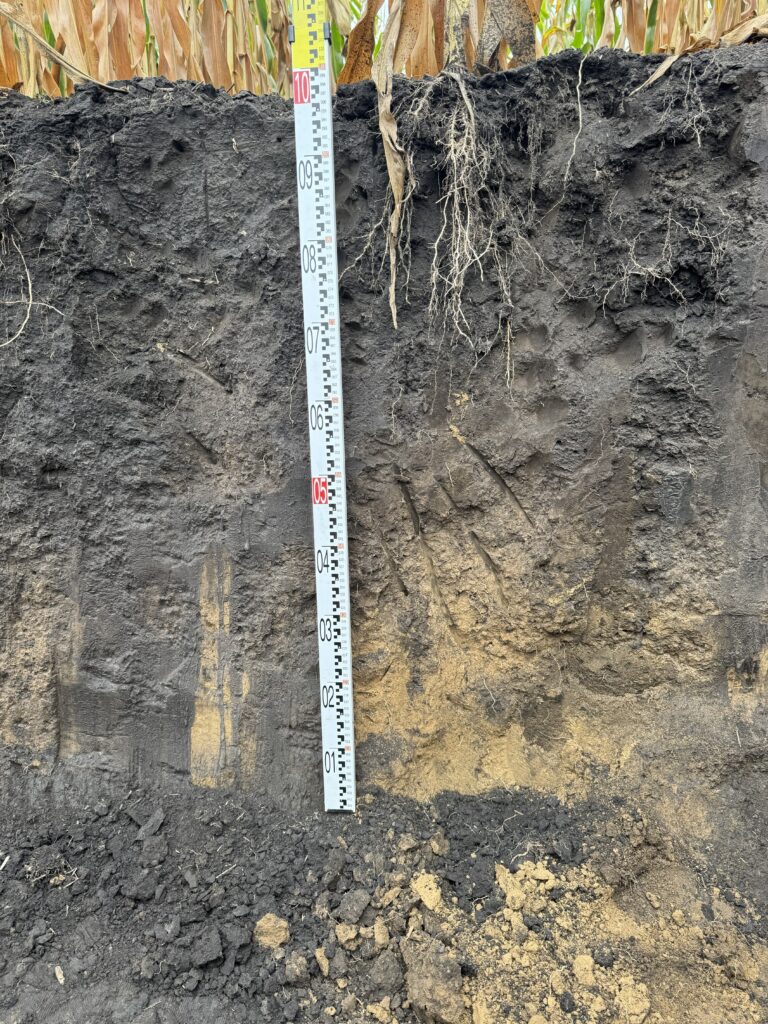
At the time the soil pit was examined, the soil remained well loosened and could easily be penetrated with a spade. A strip had been formed in spring, creating optimal conditions for root system development, and it was still clearly visible at the time of the study. The main feature of strip-till is that root development is concentrated specifically within the loosened zone. Soil structure was preserved, and no compaction was detected across the field. The greatest development of the root system was observed to a depth of 25–30 cm, while a dense cluster of roots was found around the fertilizer application zone at approximately 20 cm. Some roots extended below 110 cm, and these were not isolated roots; the lower soil layer remained structured and free of compaction. Having received the necessary nutrients and moisture, the plant actively used this deeper soil layer.
The soil was moist to a depth of 70 cm. Thanks to the strip formed in April and more than 40 mm of rainfall in May, the upper layer remained moist, while moisture was concentrated and moved deeper within the strip zones. Accordingly, at the beginning of the season, available soil moisture reserves differed between the strips and the inter-row areas, indicating effective accumulation of spring moisture specifically within the tilled strips this year.
Conclusions
At the beginning of December, Agrilab will hold the final conference of the Profitable Field season, where specialists will share the results of trials conducted at all demonstration sites, including Poltava-Sad. The preliminary examination of the corn root system in soil pits and the visual condition of the soil have demonstrated impressive results.
“Agrilab takes the soil conditions of each field into account. Terrain and soil structure have a significant impact on the final result, yield, and profitability. Strip-till and ploughing both showed good initial results: ploughing accumulates moisture quickly, but also releases it just as quickly, whereas strip-till effectively accumulates moisture within the row and releases it to the plant more slowly because the soil surface remains covered,” explained Yaroslav Boyko, CEO of Agrilab.
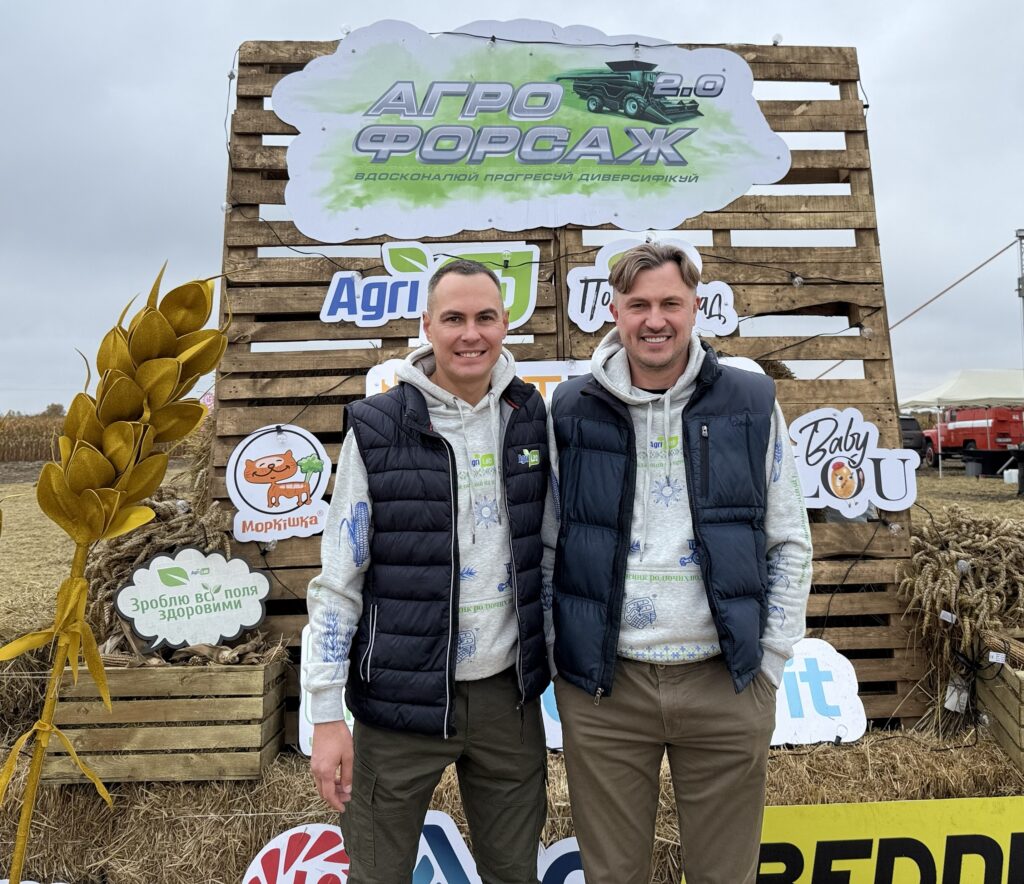
Yaroslav Boyko and Dmytro Shtanko
According to preliminary assessments, strip-till showed the strongest results and is expected to deliver the greatest yield benefit. It is followed by either ploughing or chiseling. Disking demonstrated the lowest efficiency, which can be attributed to soil compaction and insufficient moisture accumulation.
The choice of tillage system cannot be based on a single season. Trials need to be conducted under the same conditions over several years, taking into account different factors such as moisture reserves, temperature conditions, and preceding crops.
A preliminary inspection of the crops in mid-September showed that the corn in this field was still green, while other fields along the road to the farm were already dry. This was made possible by a comprehensive approach combining soil analysis, appropriate tillage practices, and a crop nutrition system.
Thus, preliminary observations confirm that technologies based on soil analysis and optimized tillage can deliver tangible results. Final conclusions will be drawn after harvest, while the full report and data from all demonstration sites will be published on the Profitable Field portal and presented at the final conference.

