Land Bank: 38,000 ha
Location: Zhytomyr, Kyiv, Chernihiv, and Khmelnytskyi regions
Crops: corn, sunflower, barley, wheat, and rye
Technologies implemented with AgriLab: comprehensive field agro-diagnostics, variable-rate fertilizer application, variable-rate seeding, variable-rate nitrogen application for straw mineralization, and digitization of data through the MyAgriLab Agronomist Portal
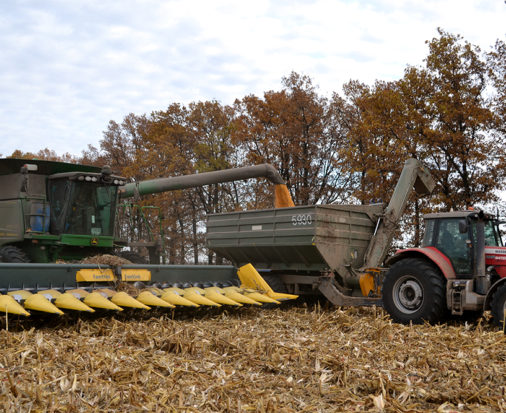
AgroRegion ranks among the top three agricultural companies in Ukraine in terms of yield and production efficiency. How does the company manage to stay at the top of the rankings among agricultural producers? And why do others struggle to achieve the same results?
It is not a matter of luck…
Predominantly sandy soils and highly variable fields… This is how Yurii Lysak, Chief Agronomist at AgroRegion, describes the company’s land.
“Sandy soils became a challenge for me as an agronomist. I come from Vinnytsia Region, an area known for its fertile chernozems. Later, I worked in Kharkiv Region, Lviv Region, and other parts of the country… Every region has its own soil characteristics. The land we cultivate in Kyiv and Chernihiv regions is predominantly sandy, and the fields are highly variable: on some areas we saw good results, while on others, yields were significantly lower. So we decided to find out why and conducted soil analysis.
Every year, the cost component of agricultural production is growing rapidly. Everyone wants to save on fertilizers. But you cannot fool the soil: if you do not apply as much fertilizer as is actually needed, you will not get the expected return. Therefore, to save money while achieving high yields, fertilizers need to be used rationally: apply what is needed, when it is needed, taking into account the crop’s requirements, specific growth stages, soil condition, and other factors. Everything needs to be carefully calculated. Otherwise, production becomes genuinely expensive.”
AgroRegion’s cooperation with AgriLab began in 2017 with a pilot project involving agro-diagnostics of 3,000 hectares of the company’s “most problematic” fields, where the greatest yield variability had been observed.
NB! Agro-diagnostics is a method for assessing a field’s potential that incorporates multiple layers of information — from soil properties to weather and climatic conditions. It includes automated soil sampling with GPS coordinates assigned to each sampling point, making it possible to determine which areas of a field are deficient in particular nutrients and which have sufficient levels. Soil agrochemical analysis covers a broad range of parameters, while weather and climate factors, field history (crop rotations), soil texture and physical condition, and other limiting factors are also taken into account. Agro-diagnostics makes it possible to determine a field’s natural potential, helping the farm generate higher profits while keeping costs optimized.
After the agro-diagnostics, AgriLab specialists provided recommendations that sparked considerable discussion within AgroRegion.
“It was a full day of debates,” recalls Yurii Lysak. “We gathered with our agronomists and discussed every detail of the recommendations. In the end, we decided to adopt them in full. The reason was that the answers to our questions were not template responses taken from textbooks, but recommendations based on practical experience, real production conditions, and, most importantly, economic considerations.
For example, after assessing the soil and weather and climatic conditions, limiting factors, and the potential of one particular field, we were advised to apply fertilizers based on a target corn yield of 8 tonnes rather than the 10 tonnes we had initially planned. This produced a positive economic result and allowed us to save resources… Previously, we had worked with another agricultural consulting company. We compared its recommendations with those of AgriLab, looked at the harvest results, and drew some important conclusions. That is why the cooperation continued.”
The effectiveness of implementing these innovations is demonstrated by the results.
“We conducted comprehensive agro-diagnostics on our fields in the village of Pyliatyn. They have problematic ‘dusty’ soils, which is actually where the village got its name — Pyliatyn. We grew rye on these fields according to AgriLab’s recommendations. The fields in Pyliatyn have a fairly high proportion of areas affected by lodging… We were targeting a yield of 6 tonnes. AgriLab specialists developed a plant nutrition system targeting 5 to 6 tonnes, depending on the potential of each field. In the end, we harvested 5.7 tonnes of rye per hectare. For these fields, that is a good yield.
In addition, the analysis allowed us to optimize the plant nutrition system and therefore our costs. The laboratory analysis showed that the soils were sufficiently supplied with phosphorus, so we reduced the use of phosphorus fertilizers. This saved us money, since phosphorus is the most expensive nutrient. We used the savings to purchase the micronutrients we needed and apply sugar beet lime by-product (defecate).
We also took the soil analysis results into account on the fields near Boryspil: we reduced phosphorus fertilizer application and used the savings to correct soil acidity. So, thanks to soil analysis, we were able to allocate our resources rationally — specifically to the inputs required by each individual field.”
The results obtained from the pilot 3,000 hectares of agro-diagnostics proved convincing. Today, comprehensive field assessments have been carried out across almost all of the company’s land. Moreover, AgroRegion has implemented precision farming technologies on 15,000 hectares.
Precision Technologies
AgroRegion operates on light, highly variable soils with different yield potentials and heterogeneous management zones. Despite these challenging conditions, corn yields on the light soils can reach up to 13 t/ha.
AgroRegion is actively implementing precision farming technologies. This year, variable-rate fertilizer application was already used across two-thirds of the cultivated area, meaning that precision farming technologies had been implemented on more than 15,000 hectares. Thanks to the introduction of variable-rate seeding, the farm saves approximately 10% of seed each year.
Variable-rate fertilizer application has made it possible to significantly optimize resource use and maintain an optimal nutrient balance: the company does not spend money on unnecessary inputs, while each plant receives the nutrients it actually needs. For example, according to the agro-diagnostics, there are areas of some fields where phosphorus fertilizers do not need to be applied at all. Given the cost of these fertilizers, the resulting savings can be substantial.
The experience of AgroRegion demonstrates that there are no inherently “better” or “worse” soils — there are technologies that are appropriately or inappropriately matched to their conditions. At AgroRegion, an individual approach to every part of the land they cultivate, combined with innovative solutions, has enabled the company to achieve high levels of production efficiency. And the company is not stopping there. There is more to come!
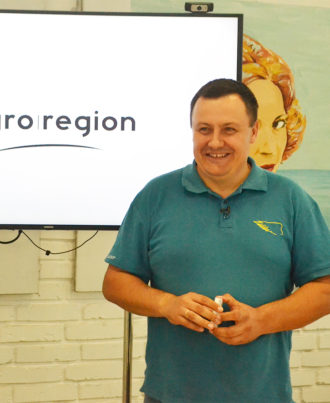
“We had previously worked with another agricultural consulting company. We compared their recommendations with those from AgriLab, looked at the harvest results, and drew some broader conclusions. So we decided to continue working with AgriLab.”


