
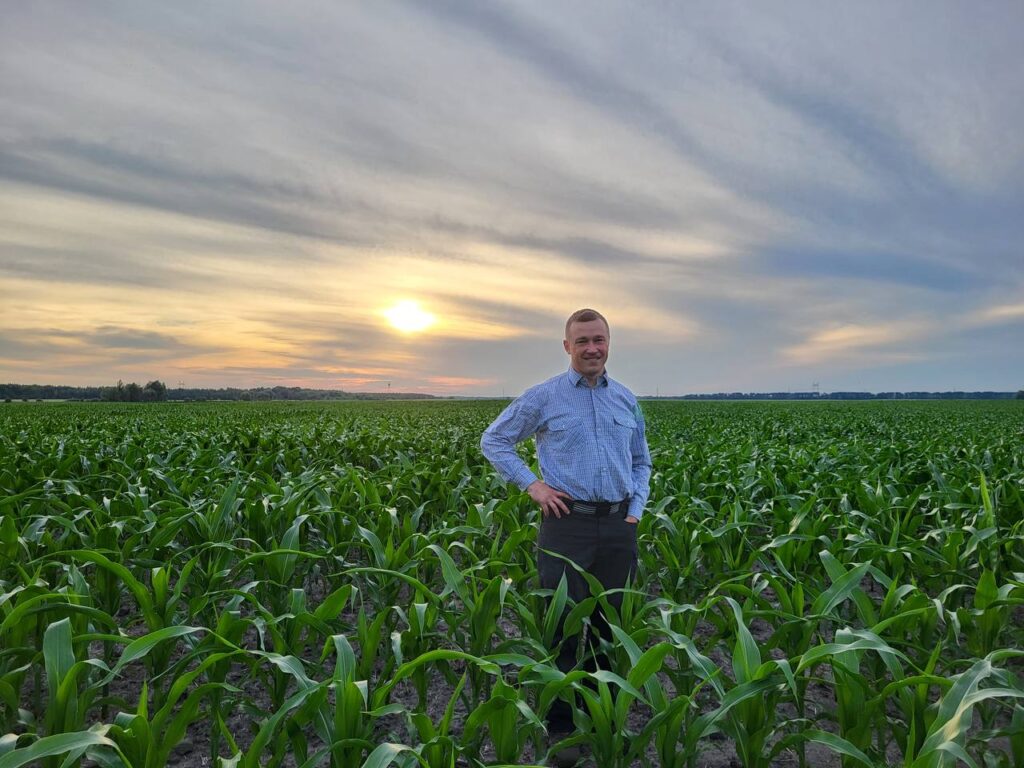
Yevhen Malashenko, Owner of Pioner Farm
High soil acidity and deficiencies in essential nutrients were limiting the potential of the fields and resulting in lost yields. These challenges became the starting point for change at Yevhen Malashenko’s farm. Thanks to soil analysis conducted with the support of the USAID AGRO Program and AgriLab LLC, Yevhen concluded that liming, variable-rate crop nutrition, and variable-rate seeding were key to improving profitability. His near-term plans include upgrading machinery and adopting a field-specific approach to unlock the full potential of every field and increase yields.
Pioner Farm was founded in 1993 by Yevhen Malashenko’s father, and Yevhen himself has been actively working in the fields for approximately 15 years. The farm is located in the settlement of Ivankiv, Kyiv Region, not far from Chornobyl. It grows grain and oilseed crops, including sunflower, corn, wheat, buckwheat, rapeseed, and others.
“When I first entered the agricultural business, I started with 20 hectares of land. I managed to sow only 16 hectares because the rains wouldn’t let us work. I grew buckwheat for the first two years, but the results were close to zero in terms of efficiency. Gradually, step by step, the farm began to develop. Over the years, our land area increased, and today Pioner Farm cultivates more than 400 hectares,” Yevhen recalls.
Like many other Ukrainian farmers, Yevhen Malashenko suffered significant economic losses when the war came to Ukraine.
“The psychological impact was enormous, but fortunately, our farm was not affected by landmines. The only issue was that some of our land was allocated for trenches and the needs of our military. The greatest economic difficulties came from changes in the exchange rate. All our machinery, seeds, and fertilizers had been purchased in foreign currency, and the exchange rate changed when the war began. We had to find ways to address our financial challenges and keep the business running. Nevertheless, despite all the difficulties, we continued striving to develop,” the farmer explains.
The first two years of the war were difficult, but this year the farm has begun to recover, partly thanks to agricultural grant support.
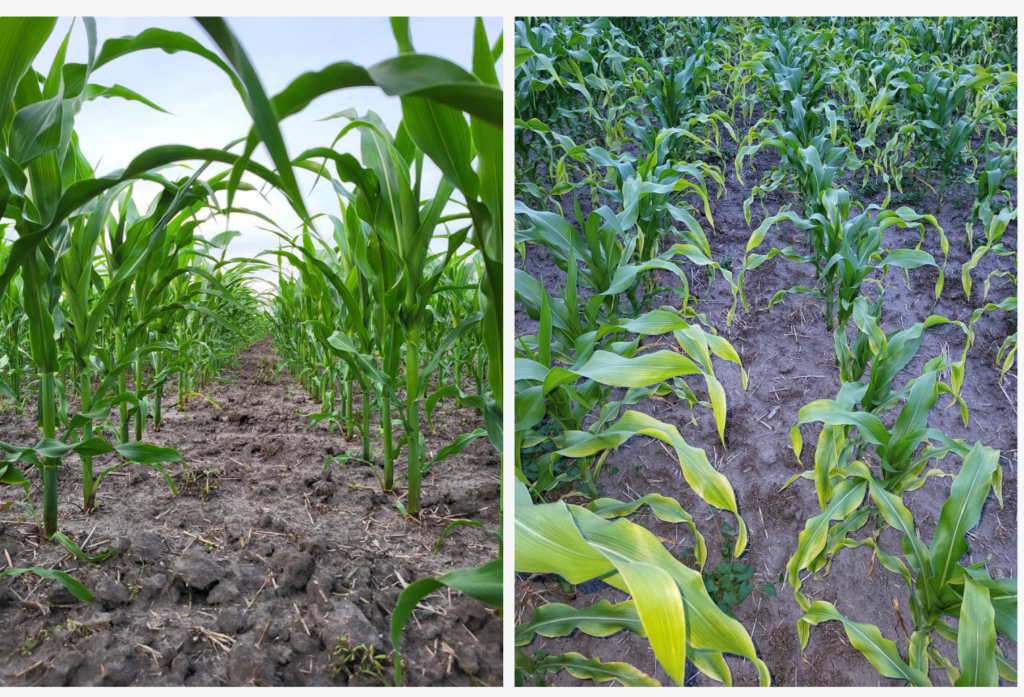
Soils at Pioner Farm
One of the important milestones in the farm’s development was its participation in a joint initiative by the USAID AGRO Program and AgriLab LLC.
“I had been mentally prepared to conduct soil analysis on my fields for a long time because I understood that we weren’t fully realizing their potential and were losing yield as a result. We needed assessments from specialists who could analyze our fields and provide clear recommendations on their condition and the measures required to unlock their potential. However, we constantly lacked the funds and determination to put these plans into action.
“When the war began, our financial situation became even more difficult. We even sold half of our machinery to pay land rent and keep the business afloat. During this challenging period, an opportunity for support through the USAID AGRO Program and AgriLab LLC became available. It allowed us to implement our plans now rather than a year or two later. I believe we can now operate at full capacity,” Yevhen says.
“Thanks to the joint initiative of the USAID AGRO Program and AgriLab LLC, we were able to assess the potential of our fields and determine their needs. The analysis showed that approximately 25% of our land has very low productive potential and therefore requires a specific approach to selecting crop nutrition systems, crops, and target yields. The remaining 75% of the land has medium productive potential. Based on the recommendations received through the project, we expect to increase yields by 10–30% compared with our planned yield levels,” Yevhen explains.
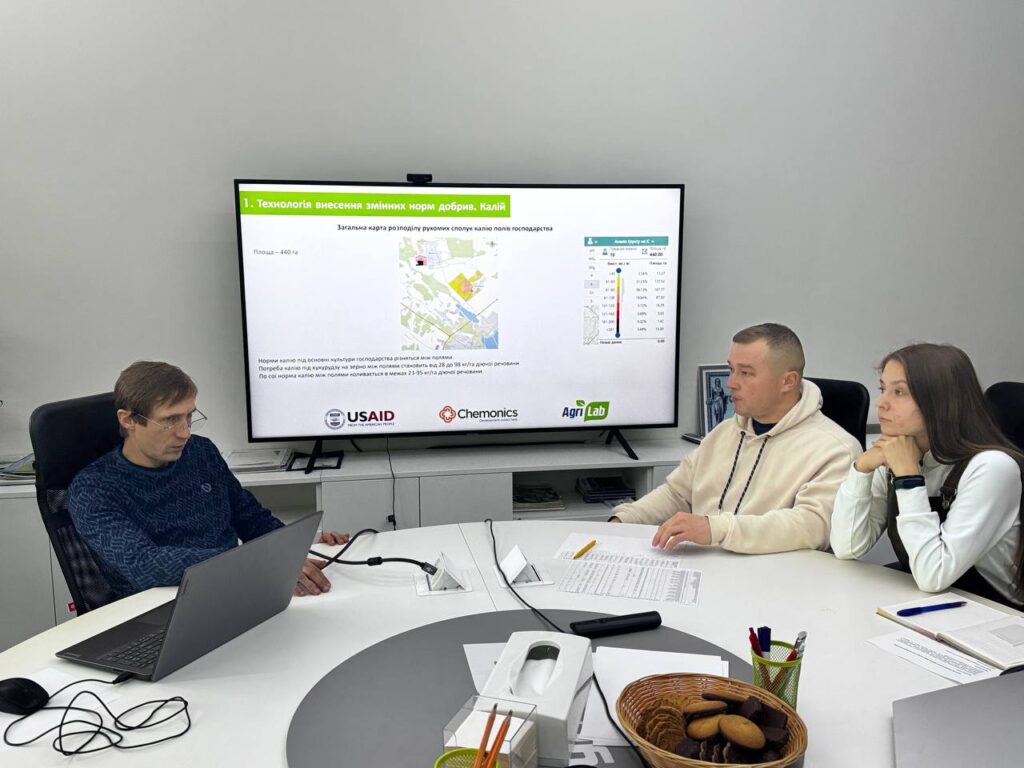
The Second Agronomic and Technological Consultation Under the Joint USAID AGRO Program and AgriLab LLC Project
The audit also revealed that 77% of the surveyed area requires variable-rate fertilizer application. In particular, variable-rate application is needed for potassium across 84% of the area and for zinc across 91%. In addition, variable-rate seeding would be effective on 50% of the farm’s land.
Another particularly important finding was that more than 80% of the area requires liming due to high soil acidity, which is the main limiting factor for crop yields.
“According to estimates by AgriLab LLC experts, yield losses caused by soil acidity amount to as much as $300 per hectare annually. Across our entire farm, this could mean losses exceeding $100,000 every year.”
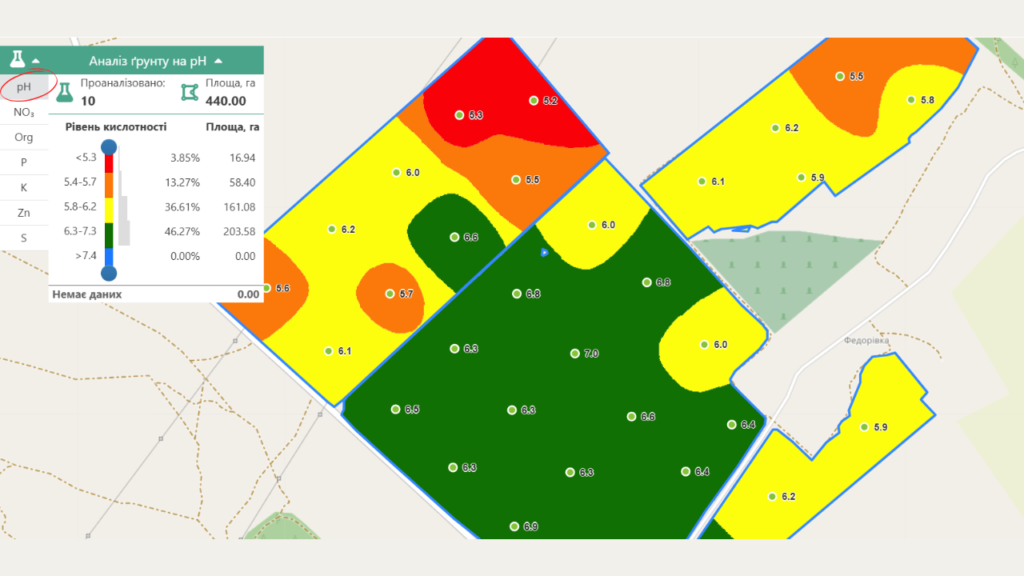
Soil Acidity Analysis Results at Pioner Farm
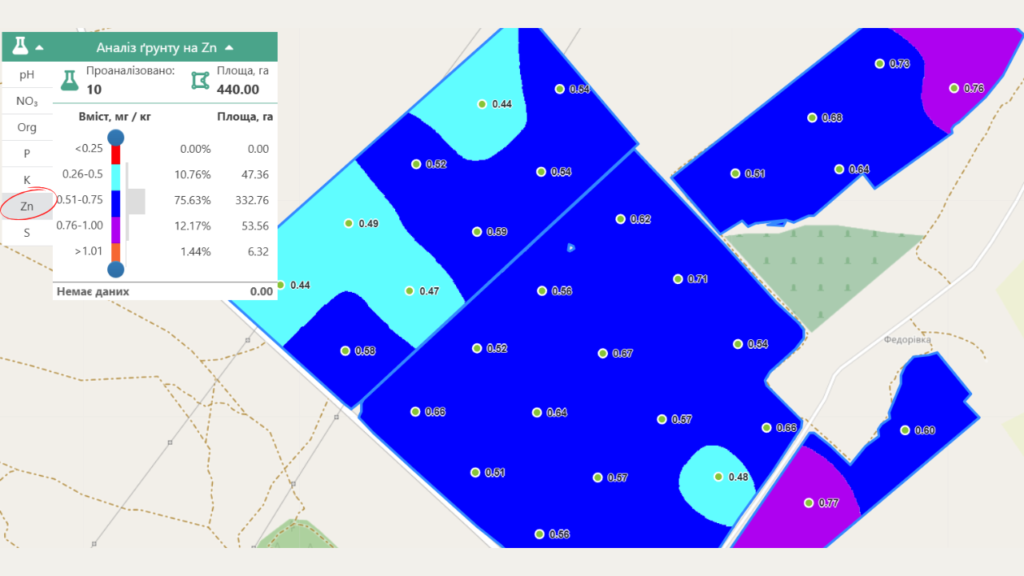
Soil Zinc Content Analysis Results at Pioner Farm
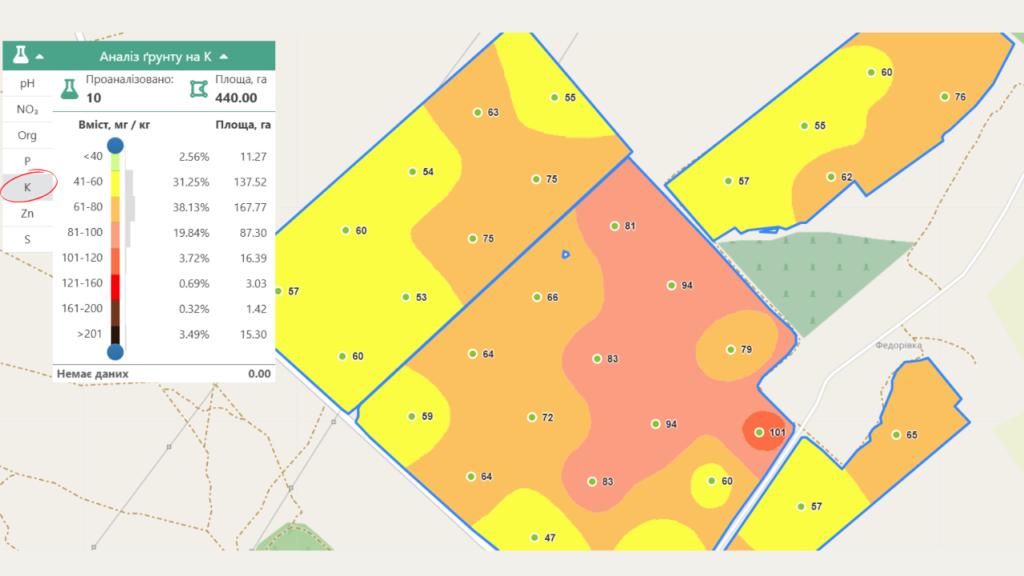
Soil Potassium Content Analysis Results at Pioner Farm
“Our next steps are gradual liming and the implementation of variable-rate crop nutrition systems, both between fields and within individual fields. This will help us achieve our strategic goals over the next three to five years and ensure the farm’s sustainable development,” Yevhen concludes.
The lessons of the war have provided difficult but valuable experience for the future.
“My main mistake was being too optimistic when planning and investing, expecting the war to end quickly. In reality, I should have been more cautious with spending and chosen crops according to each field’s capabilities, even if that meant achieving lower yields,” Yevhen shares.
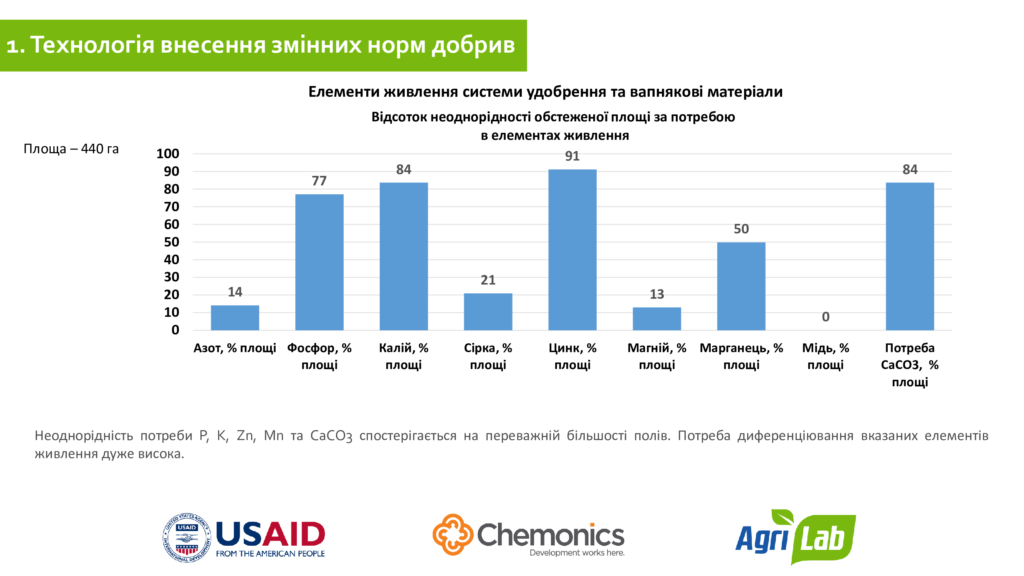
Variable-Rate Fertilizer Application Technology
Yevhen has clear plans for the farm’s future development.
“We have now completed soil analysis and received the necessary consultations. We plan to improve crop production efficiency by optimizing crop nutrition systems according to the potential of each field and implementing a strategy to improve our land. The first priority is soil amelioration, where we still have work to do.
“It is important to equip the farm with the necessary machinery and become less dependent on contractors. We also aim to develop processing activities to diversify risks and become more competitive,” he concludes.
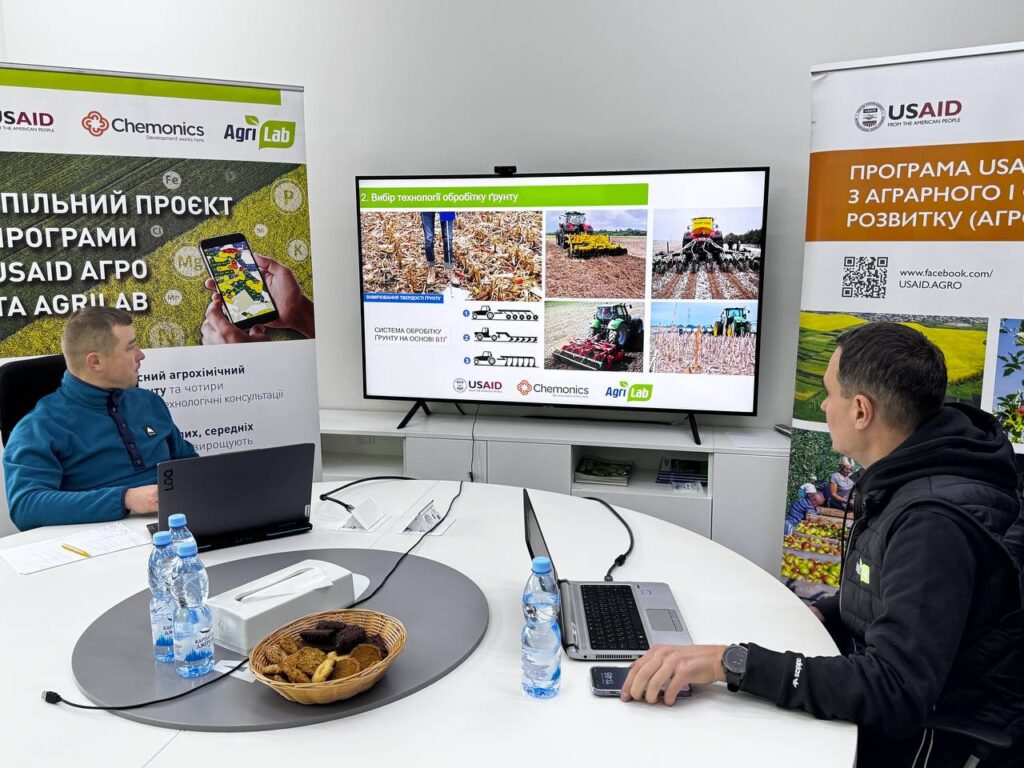
The Fourth Agronomic and Technological Consultation Under the Joint USAID AGRO Program and AgriLab LLC Project
Despite numerous challenges, Pioner Farm, led by Yevhen Malashenko, demonstrates resilience and a commitment to development, continuing to move forward even under difficult conditions. As part of the program, several stages were completed, including soil analysis and four agronomic and technological consultations.
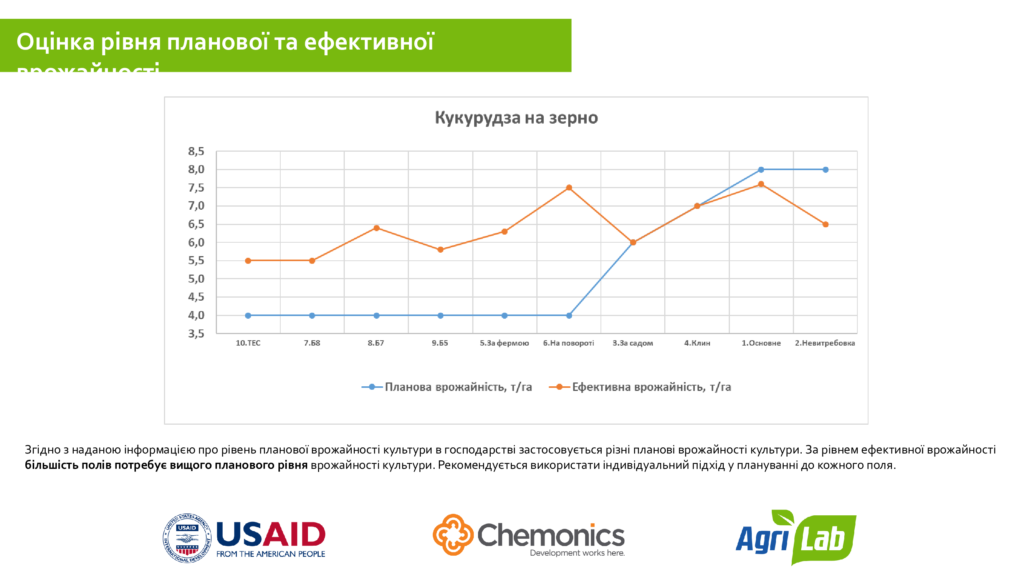
Assessment of Planned and Effective Crop Yields
“During the first agronomic and technological consultation, we received soil agrochemical maps, an analysis of weather and climatic conditions, and an assessment of field history. Soil productivity potential was calculated, and effective yield levels were determined. Recommendations were also developed for the crop nutrition system, including the optimal fertilizer rates, forms, timing, and application methods.
“The second stage included recommendations for variable-rate application of key nutrients: nitrogen, phosphorus, potassium, sulfur, and zinc. We also assessed the need for liming materials and considered options for variable-rate seeding.
“The third consultation involved an assessment of the farm’s machinery fleet and the development of a modernization strategy to support the implementation of precision farming technologies.
“During the final stage, we gained valuable knowledge about using remote sensing technologies and received training in their effective application,” Yevhen Malashenko summarizes.

