Oleksandr Panasiuk, owner of Panasiuka M.V. Farm, smiles when asked about the farm’s achievements, saying he has no reason to make grand claims.
“There’s nothing extraordinary happening here that we could really boast about,” he says at the beginning of our conversation.
Yet behind this modesty lies years of practical experience and a well-established approach to farming — one based on understanding the land, adapting to conditions and getting the job done without unnecessary fuss.
Panasiuka M.V. Farm is located in the village of Tarasivka, Kropyvnytskyi District, Kirovohrad Region, Ukraine. The farm’s fields are predominantly made up of ordinary medium-humus chernozem soils. Soil conditions across the area are relatively uniform, while the fields themselves have a high level of natural fertility.
The farm does not rely on a one-size-fits-all approach. Tillage and crop establishment practices vary depending on the crop, the individual field and the season. Winter crops are established using direct seeding, while industrial crops require deep loosening. Some fields, meanwhile, are still managed using conventional tillage.
This flexible approach allows the farm to adapt its technology to the specific conditions of each field rather than simply following a single production system across the entire operation.
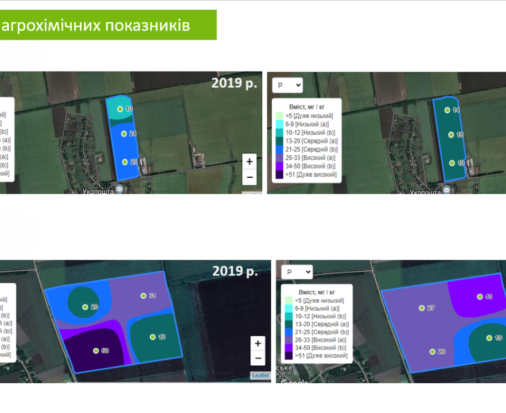
The decisions made on the farm are driven not by the latest trends, but by years of experience and detailed field observations. Five years ago, the farm carried out its first comprehensive soil analysis, and the results showed that it was moving in the right direction. Several years later, a follow-up analysis confirmed those conclusions.
“We looked at the results — everything was good. Everything was where it should be. So, our efforts weren’t in vain,” Oleksandr says.
For him, soil analysis is more than just a monitoring tool. It is a way to validate long-term management decisions and make sure the farm’s overall strategy is delivering the desired results.
The strongest confirmation that the farm had chosen the right path came from the follow-up soil analysis, which showed a significant improvement in several key indicators. Phosphorus and potassium levels increased in some fields, while others showed higher sulfur content.
The frequency of soil testing depends on the specific needs of each field — some are tested every three years, while others are analyzed every five years.
“We looked at the results and weren’t disappointed. The nutrient levels in the soil are improving — that’s the best result we could have,” Oleksandr concludes.
This year, the farm decided to stop growing corn. “Moisture conditions are very poor — probably even worse than last year,” Panasiuk says.
Instead, the farm is focusing on winter cereals, rapeseed and sunflower — crops that offer better prospects for achieving stable yields under conditions of limited rainfall.


