


Agro School of Credit Agricole Bank: soil analysis as an instrument for increasing the efficiency of the economy
How to save fertilizers and don’t lose any centner of yield? How to improve resource efficiency? How much investment do innovative technologies need and what financial result they can give? These issues were discussed today by AgriLab specialists with the Agro School of Agriсole Bank.
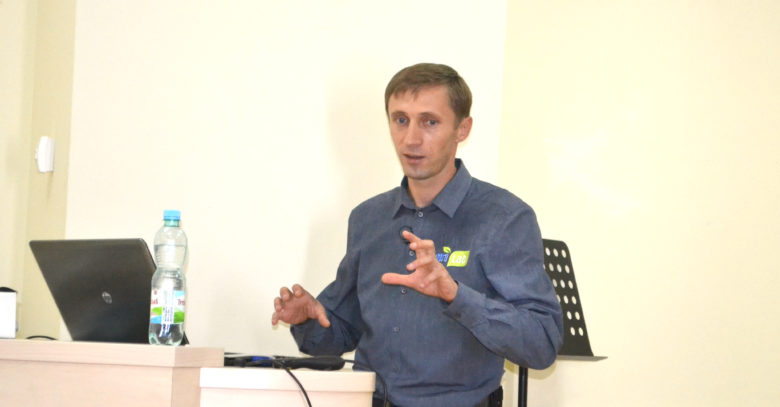
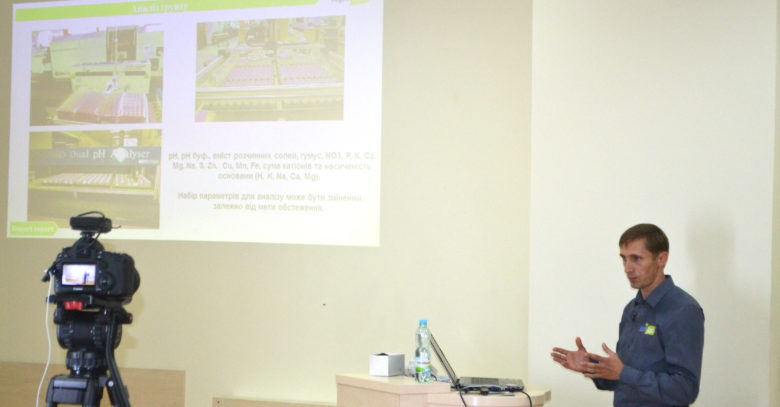
“Up to 60% of the yield depends on the level of soil fertility. Soils data is a tool for efficiently field control, including the cost of nutrition system. Getting such data is possible only through soil analysis, – said Volodymyr Mahota, head of the scientific and technical department of the AgriLab. The plant will not absorb the elements more than it needs. At the same time, the excess of one element does not compensate for the shortage of another. ”
Volodymyr Mahota noted, that soil analysis is the basis for planning an effective crops nutrition system. However, in addition to agrochemical indicators, it is necessary to take into account also weather and climatic conditions, critical factors of the development of crops, natural potential of the field. The combined analysis of these factors allows optimizing the use of fertilizers, seeds, etc: “If we know that the field has a low potential, we do not input all resources.”
As proof of the economic efficiency of such decision, an expert in agrochemistry showed an example of the nutrition system calculation of one farm: the agronomists of the company identified a planned yield of 7.5 tons / ha. and calculated for it receiving nutrition system. In the same field, after conducting a comprehensive agrodiagnostic, experts have determined that the potential of the field – the lowest – 6.5 / ha. And to achieve this yield less resources is enough. As a result, the company still really got the harvest at the level that allowed the potential of the field, but thanks to the analysis saved $ 144 per hectare.

