
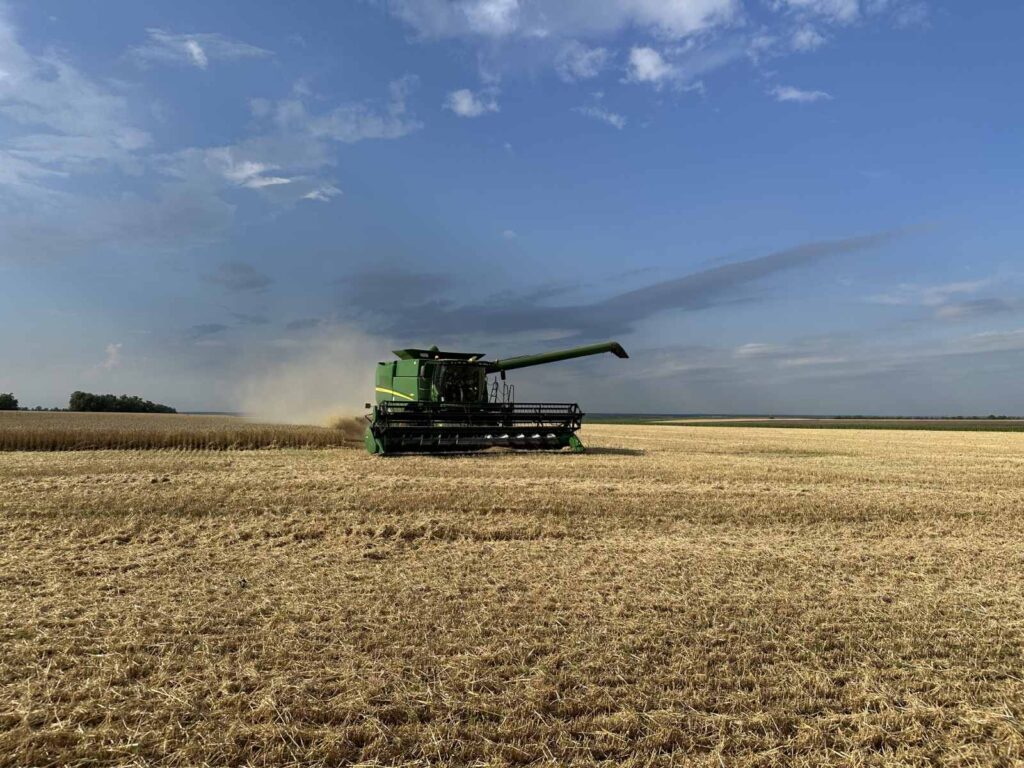
Harvesting at Panasiuka M.V. Farm
Oleksandr Panasiuk, owner of Panasiuka M.V. Farm, notes with a smile that he has no reason to make grand statements. “There’s nothing special happening here that we should brag about,” he says at the beginning of our conversation. Yet behind this modesty lies years of hands-on experience and an ability to work with fields without unnecessary emotion.
Panasiuka M.V. Farm is located in the village of Tarasivka, Kropyvnytskyi District, Kirovohrad Region. The soils are predominantly medium-humus ordinary chernozems. Soil conditions across the farm’s fields are relatively uniform, and the fields are characterized by high natural soil fertility. The technologies used vary depending on the crop, field, and season: winter crops are planted using direct seeding, industrial crops require deep loosening, while some fields are managed using conventional tillage.
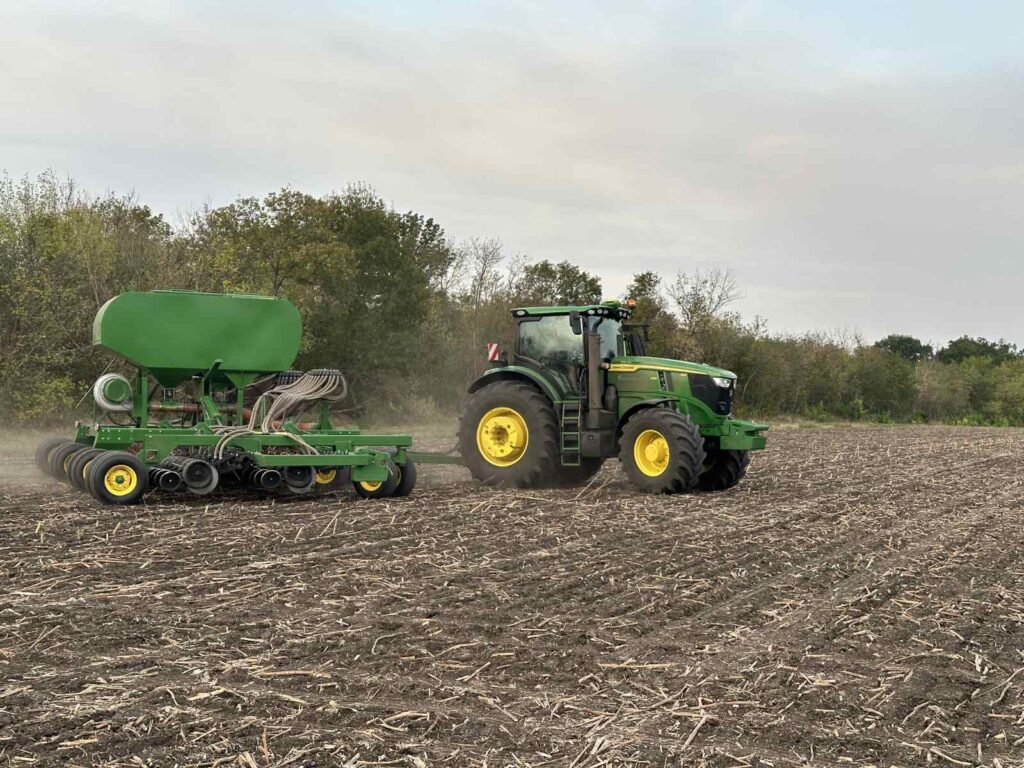
Sowing campaign at Panasiuka M.V. Farm
The farm’s decisions are based not on fashionable trends, but on years of experience and detailed observations. The first soil analysis was conducted five years ago, and the results showed that the farm was moving in the right direction. Several years later, a repeat analysis confirmed these conclusions. “We looked at the results — everything was fine. Everything was in place. So, our efforts weren’t in vain,” says Oleksandr. For him, soil analysis is not simply a means of monitoring conditions, but a tool for validating strategic decisions.
The real confirmation that the chosen approach was working came from the repeat soil analysis, which showed significant improvements in several indicators. Phosphorus and potassium levels increased in some fields, while higher sulfur levels were recorded in others. Soil analyses are conducted according to the farm’s needs: in some areas every three years, and in others every five. “We looked at the results and weren’t disappointed. The nutrient levels in the soil are improving — that’s the best result,” Oleksandr concludes.
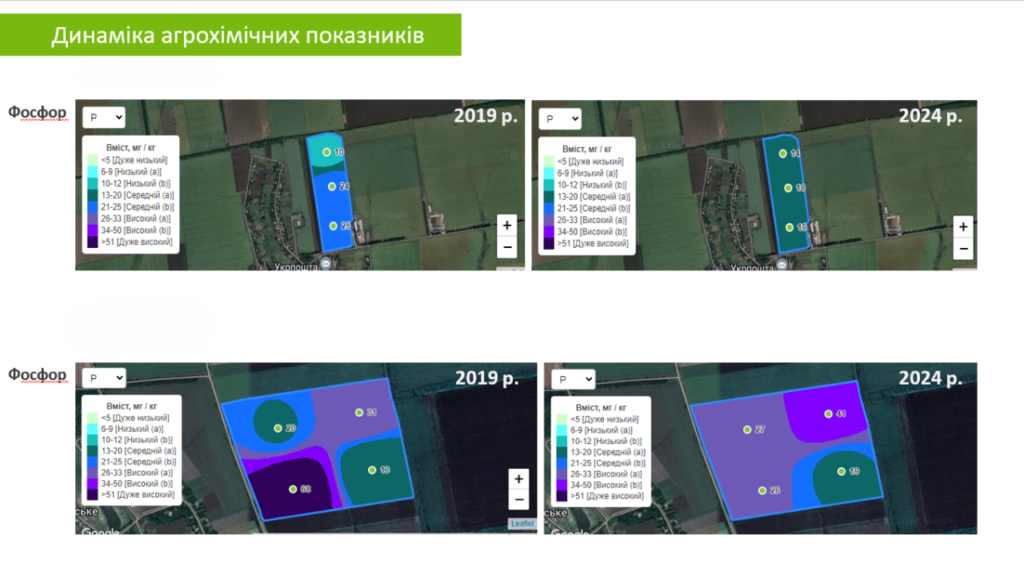
Changes in phosphorus levels in 2019 and 2024
The farm operates at a level that many agricultural producers aspire to. Precision farming technologies have been in use for more than 10 years. For example, yield mapping on combines and section-by-section shutoff of seed drills and sprayers are no longer new technologies for the farm, but standard practice. These technologies have fully proven their value, the farmer notes.
This year, the farm decided not to plant corn. “Moisture conditions are very poor — probably worse than last year,” Panasiuk says. Instead, the farm is growing winter cereals, rapeseed, and sunflower — crops that have a better chance of delivering stable results under conditions of limited rainfall.
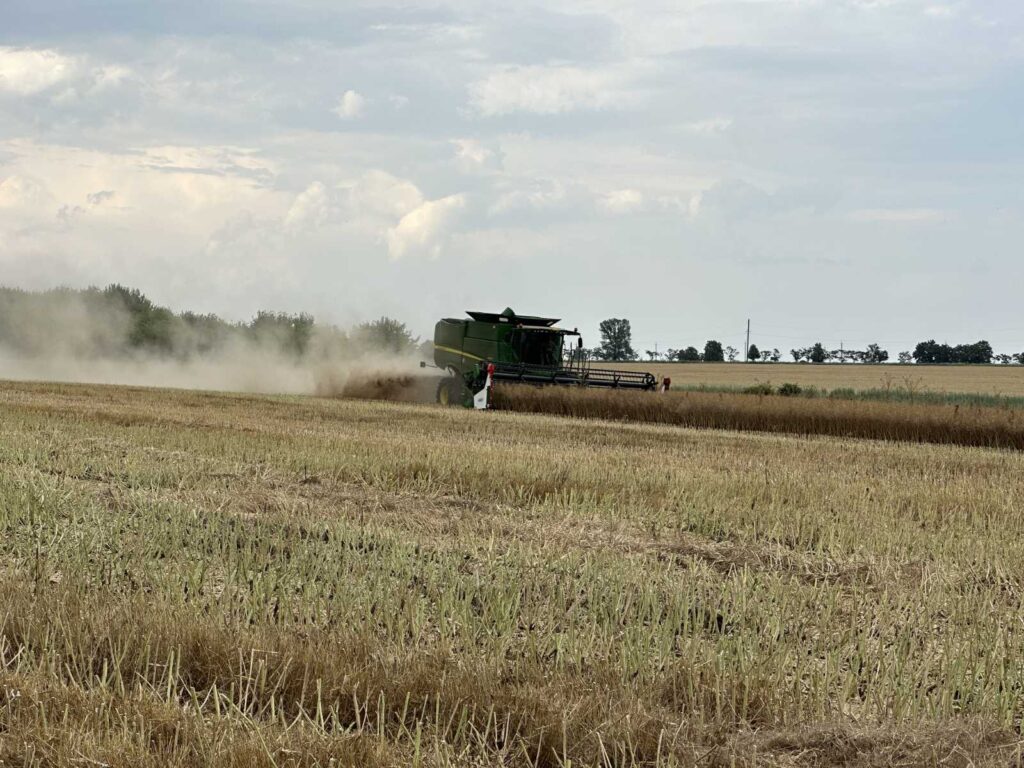
Harvesting at Panasiuka M.V. Farm
The cooperation with AgriLab was not the starting point, but rather a confirmation. Sometimes that is the most important thing for a modern farmer: not to start over, but to confidently continue along the chosen path, knowing that the decisions being made are the right ones.

